Revision Foot & Ankle Surgery
-
Eitan Ingall, MD Fellowship Trained Orthopaedic Surgeon
Dr. Ingall is a fellowship-trained orthopedic foot and ankle surgeon who prides himself on delivering compassionate, evidence-based care to his patients.
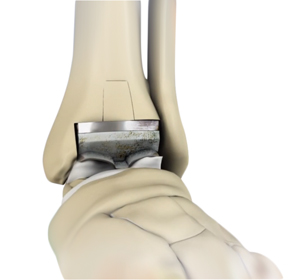
What is Revision Foot & Ankle Surgery?
Foot & Ankle surgery is performed when injuries or conditions are severe and conservative treatment methods are inadequate. It may involve repairing, realigning, or reconstructing structures in the Foot & Ankle. The procedure is safe and outcomes are generally good, but occasionally failure may occur due to various reasons. Revision Foot & Ankle surgery is recommended to correct problems and to improve results.
Anatomy of the Foot & Ankle
The Foot & Ankle are complex structures that are involved in movement and provide stability and balance to the body. They consist of 26 bones, 33 joints, and several tendons, muscles, and ligaments.
The foot is usually differentiated into 3 parts; the forefoot (5 toes) that forms the front of the foot, the midfoot (5 bones) that forms the arch of the foot, and the hindfoot that is comprised of the heel and ankle. The ankle is made up of 3 bones: the tibia, fibula, and talus. Ligaments and tendons provide flexibility to the foot enabling a wide range of movements.
Indications of Revision Foot & Ankle Surgery
Revision Foot & Ankle surgery is indicated when there are complications following initial surgery including persistent pain and disability, deformity, or need for additional stability.
Procedure of Revision Foot & Ankle Surgery
If possible, revision Foot & Ankle surgery may be carried out using a minimally invasive arthroscopic technique. During the procedure, your Foot & Ankle surgeon may repair, realign, or reposition bones, tendons, and ligaments. The procedure may involve the removal of a damaged implant or a painful internal fixation device. A new fixation device may be placed to improve stability. Revision surgery is usually more complicated than the initial procedure and takes longer to complete.
Recovery following Revision Foot & Ankle Surgery
Recovery depends on the procedure performed and usually takes the same time as the initial procedure. Your doctor will restrict weight-bearing and you may need to use crutches for a few weeks. You may need to wear a brace or a boot. Keep your dressing dry and clean. Elevate the foot above heart level to help reduce swelling. You will be advised to follow a healthy diet and to avoid smoking which can delay healing.
Risks and Complications of Revision Foot & Ankle Surgery
Risks and complications of revision Foot & Ankle surgery include:
- Poor bone healing
- Pain
- Infection
- Malalignment of joints
- Impingement
- Damage to nerves and blood vessels
For more information about our services or to schedule an appointment, call us at or click here to request an appointment online. We'll respond to you as soon as possible.