Percutaneous Reduction Internal Fixation (PRIF) of the Foot
-
Eitan Ingall, MD Fellowship Trained Orthopaedic Surgeon
Dr. Ingall is a fellowship-trained orthopedic foot and ankle surgeon who prides himself on delivering compassionate, evidence-based care to his patients.
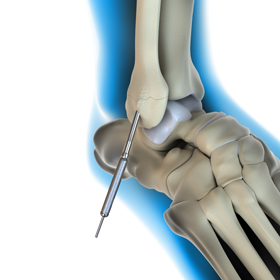
What is Percutaneous Reduction Internal Fixation (PRIF) of the Foot?
Percutaneous reduction internal fixation (PRIF) of the foot is a minimally invasive surgical technique used to treat certain foot fractures. Through small skin incisions, the surgeon realigns the broken bones (reduction) and stabilizes them with internal fixation devices such as pins, screws, or wires, guided by imaging like X-ray or fluoroscopy.
When is Percutaneous Reduction Internal Fixation (PRIF) of the Foot Recommended?
Percutaneous reduction internal fixation (PRIF) of the foot is recommended when a fracture needs accurate alignment and stable fixation, but can be treated without fully opening the surgical site. It is commonly advised in the following situations:
- Displaced or unstable foot fractures where bones are misaligned
- Metatarsal or phalangeal fractures that cannot be managed with casting alone
- Certain midfoot injuries (selected Lisfranc or tarsal fractures)
- Fractures with minimal soft-tissue damage, making a minimally invasive approach suitable
- Patients who would benefit from faster recovery and reduced surgical trauma
How Should I Prepare for Percutaneous Reduction Internal Fixation (PRIF) of the Foot?
Preparation for PRIF of the foot includes reviewing X-rays or scans, a medical evaluation, and possible blood tests. Inform your surgeon about medications, allergies, and health conditions. Follow fasting instructions, stop certain drugs if advised, avoid smoking, keep the foot clean, and arrange transportation and postoperative support at home.
What Should I Expect During Percutaneous Reduction Internal Fixation (PRIF) of the Foot?
During PRIF of the foot, you are given regional or general anesthesia to keep you comfortable. The surgeon uses imaging guidance to realign the fractured bones through small skin incisions. Pins, screws, or wires are then inserted to stabilize the bones. Because the procedure is minimally invasive, soft-tissue damage is limited. The incisions are closed, a dressing or splint is applied, and the procedure typically lasts less than an hour, depending on fracture complexity.
What Does Postoperative Care and Recovery Involve with Percutaneous Reduction Internal Fixation (PRIF) of the Foot?
After PRIF of the foot, the foot is usually immobilized in a splint or cast to protect healing bones. Elevation, ice, and prescribed pain medication help control swelling and discomfort. Weight-bearing is often limited initially. Wound care is important to prevent infection. Follow-up visits include X-rays to monitor healing, and gradual physical therapy helps restore strength, motion, and function.
What are the Risks and Benefits of Percutaneous Reduction Internal Fixation (PRIF) of the Foot?
PRIF of the foot offers several advantages but also carries some risks. These include the following:
Benefits
- Minimally invasive, with smaller incisions
- Less soft-tissue damage, pain, and swelling
- Lower infection risk compared to open surgery
- Faster recovery and earlier return to activity
- Improved fracture alignment and stability
Risks
- Infection at the pin or incision sites
- Nerve or blood vessel injury
- Hardware irritation or failure
- Delayed healing or nonunion
- Residual stiffness or pain
For more information about our services or to schedule an appointment, call us at or click here to request an appointment online. We'll respond to you as soon as possible.