Percutaneous Reduction Internal Fixation (PRIF) of the Ankle
-
Eitan Ingall, MD Fellowship Trained Orthopaedic Surgeon
Dr. Ingall is a fellowship-trained orthopedic foot and ankle surgeon who prides himself on delivering compassionate, evidence-based care to his patients.
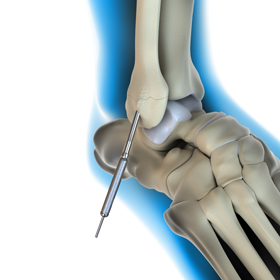
What is Percutaneous Reduction Internal Fixation (PRIF) of the Ankle?
Percutaneous reduction internal fixation (PRIF) of the ankle is a minimally invasive surgical technique used to treat certain ankle fractures by realigning the broken bones and stabilizing them with internal hardware through small skin incisions.
What are the Indications for Percutaneous Reduction Internal Fixation (PRIF) of the Ankle?
PRIF of the ankle is indicated in selected ankle fractures where stable fixation can be achieved with minimal soft-tissue disruption. Common indications include:
- Minimally displaced or reducible ankle fractures
- Unstable fractures that require fixation but allow closed or percutaneous reduction
- Isolated malleolar fractures (medial, lateral, or posterior) suitable for screw or pin fixation
- Bimalleolar or trimalleolar fractures with acceptable alignment after closed reduction
- Fractures with significant soft-tissue swelling, where open surgery carries a higher risk
- Patients at higher risk of wound complications (e.g., diabetes, elderly patients)
- Acute fractures treated early, before significant callus formation
PRIF is chosen when accurate fracture alignment can be confirmed fluoroscopically and stable fixation can be achieved without open exposure.
How Should I Prepare for Percutaneous Reduction Internal Fixation (PRIF) of the Ankle?
Preparation for PRIF of the ankle includes a medical evaluation, imaging studies, and blood tests. Inform your surgeon about medications, allergies, or medical conditions. Stop smoking and certain medications as advised. Follow fasting instructions before surgery and arrange transportation and postoperative support for recovery at home.
What Should I Expect During Percutaneous Reduction Internal Fixation (PRIF) of the Ankle Procedure?
During PRIF of the ankle, you will receive regional or general anesthesia for comfort. Using X-ray guidance, the surgeon realigns the fractured bones without a large incision. Small incisions are made to insert internal hardware, such as screws or pins that stabilize the fracture. The surrounding muscles and soft tissues are largely preserved. Once proper alignment and fixation are confirmed on imaging, the ankle is dressed and immobilized with a splint or cast.
What Happens After Percutaneous Reduction Internal Fixation (PRIF) of the Ankle?
Postoperative care after PRIF of the ankle focuses on protecting the repair and promoting healing. The ankle is immobilized with a splint or cast, and the leg is elevated to reduce swelling. Pain is managed with medications. Weight-bearing is restricted initially, followed by gradual rehabilitation and physical therapy to restore movement and strength. Follow-up visits with X-rays ensure proper healing and stable fixation.
What are the Risks and Benefits of Percutaneous Reduction Internal Fixation (PRIF) of the Ankle?
PRIF of the ankle offers several advantages, but it also carries potential risks.
Benefits
- Minimally invasive with small incisions
- Less soft-tissue damage and scarring
- Reduced pain and swelling after surgery
- Lower risk of wound complications and infection
- Shorter hospital stay and faster recovery
- Accurate fracture alignment using real-time imaging
Risks
- Infection (though less common than open surgery)
- Injury to nearby nerves or blood vessels
- Hardware problems, such as loosening or irritation
- Incomplete reduction or loss of fixation
- Delayed healing or nonunion
- Ankle stiffness or post-traumatic arthritis
For more information about our services or to schedule an appointment, call us at or click here to request an appointment online. We'll respond to you as soon as possible.